
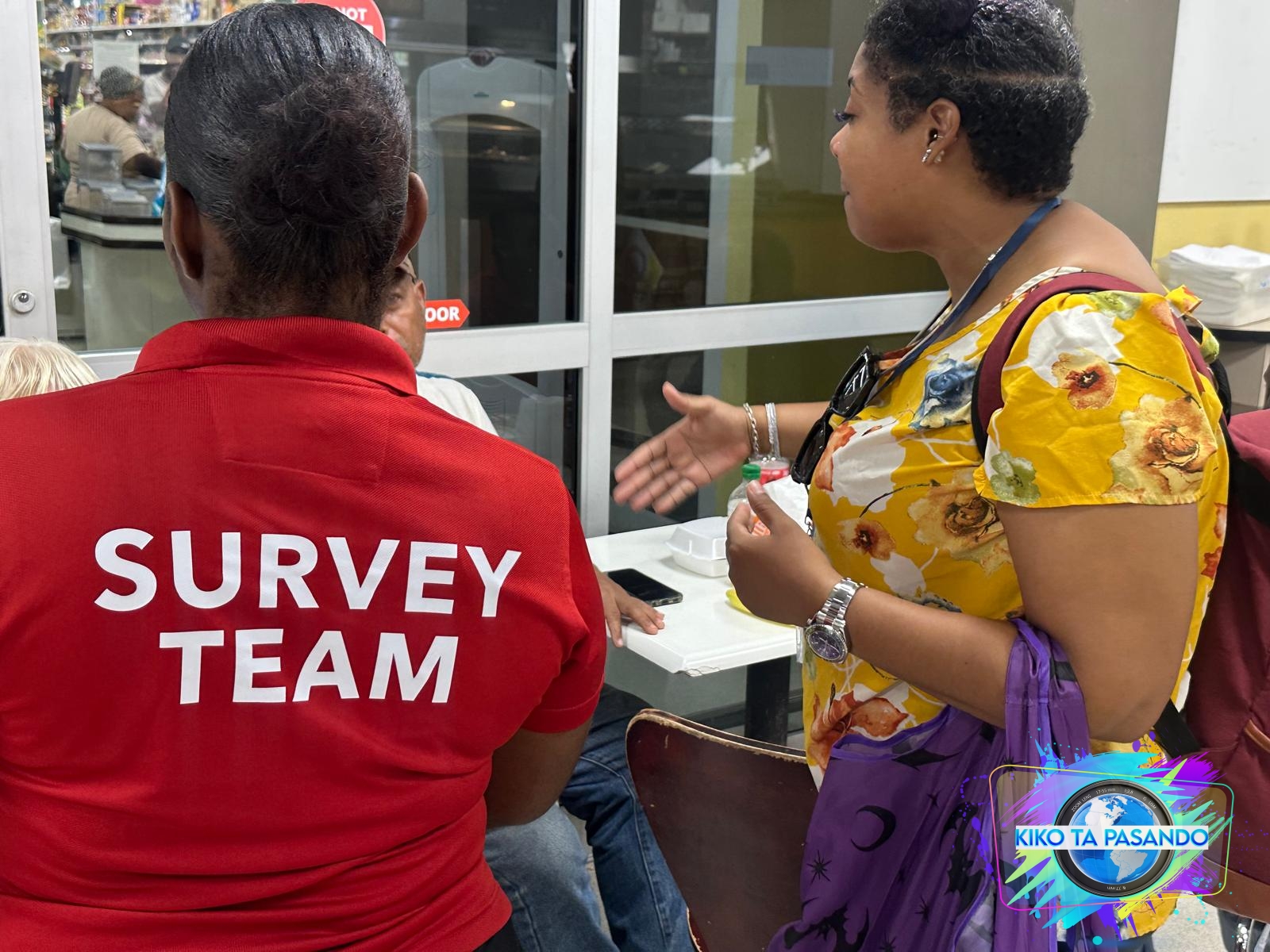
Habitantenan di Kòrsou ke prinsipalmente mas palu di fresku, roinan limpi i gastunan di utilidat mas abou komo medidanan di kambio di klima
Habitantenan di Kòrsou ke prinsipalmente mas palu di fresku, roinan limpi i gastunan di utilidat mas abou komo medidanan di kambio di klima
WILLEMSTAD – Mayoria di habitantenan di Kòrsou ta eksperensiá e efektonan di kambio di klima kaba den nan bida diario, spesialmente pa motibu di kalor ekstremo, gastunan mas haltu pa awa i elektrisidat, i problema ku infrastruktura. Na mes momentu konsientisashon ku mester bini kambio den maneho di nos klima ta kresiendo. Esaki ta sali for di un enkuesta nashonal grandi bou di 555 habitante, realisá na òktober i novèmber 2025 komo parti di desaroyo di e Strategia Nashonal di Adaptashon di Kòrsou (NAS-Ç).
E investigashon ta mustra ku habitantenan tin prioridatnan kla i práktiko riba kon Kòrsou mester prepará su mes pa kambio di klima. Riba e lista tin plantamentu di mas palu i kreashon di espasionan bèrdè (41%), restourá i mantené e roinan limpi (37%), i mehorá infrastruktura pa prevení inundashon i alabes hasi mihó uso di awaseru (35%). Ta remarkabel ku protekshon di kosta ku strukturanan grandi i duru, manera muraya di laman, ta haña hopi ménos sosten (11%).
Gastunan haltu i kalor ekstremo ta evidente
Kasi mitar di e partisipantenan ta indiká ku den e último sinku añanan nan a eksperensiá gastunan mas haltu pa energia, awa, kombustibel i kuminda pa motibu di kondishonnan di klima. Mas ku mitar (55%) ta bisa ku nan a sufri hopi di dianan hopi kalor. Mirando e dies añanan ku ta bin, hopi habitante ta pensa ku spesialmente fakturanan di awa i koriente mas haltu, i tempu hopi kalor i seku, lo tin un gran influensia riba nan bida.
Adaptashon na klima ta wòrdu mirá pa 76% di e partisipantenan komo importante òf di prioridat haltu. Banda di esaki, 14% ta di akuerdo kompletamente ku e ponensia ku por konfia gobièrnu pa aktua den mihó interes di Kòrsou. Esaki ta mustra un ekspektativa kla di Liderasko, kombiná ku nesesidat di transparensia i partisipashon di siudadanonan.
Naturalesa i finansiamentu ta núkleo den solushonnan
Den tur tema di e investigashon, habitantenan ta skohe hopi biaha pa solushonnan basá riba naturalesa. Mas vegetashon den bario, protekshon di rif di koral i palunan di mangel, i restourashon di kanalanan natural di awa ta keda menshoná frekuentemente. Ademas, kapital ta hunga un ròl importante. E medida mas skohé den tema di ekonomia i finansa ta kreashon di finansiamentu pagabel pa famianan ku entrada abou por invertí den medidanan di klima manera kas mas fresku, fakturanan di awa I koriente mas abou, i protekshon kontra daño di desasternan natural (45%).
Hopi habitante ta indiká ku nan ta dispuesto pa tuma medidanan nan mes, manera spar awa i energia (54%), prepará un pakete di emergensia (67%), i kumpra mas kuminda produsí lokalmente (51%). Falta di informashon (35%), e gastunan mará na e medidanan (29%), i e sintimentu ku gobièrnu ta responsabel (39%) ta wòrdu menshoná komo e bareranan prinsipal pa tuma akshon nan mes.
“Kuminsá ku pone e base na òrdu”
Ora puntra pa rekomendashonnan, habitantenan ta enfatisá repetidamente ku adaptashon na klima ta kuminsá ku pone e base na òrdu: mantenshon di kamindanan, labadó i damnan bon mantené, evitá konstrukshon den kanalanan natural di awa, i mantené bario limpi. Hopi partisipante ta relashoná adaptashon na klima direktamente ku kalidad di bida, limpiesa, naturalesa, edukashon i gastunan di bida.
E resultadonan di e enkesta aki ta wòrdu usá den e Strategia Nashonal di Adaptashon di Kòrsou. E investigashon a wòrdu realisá pa Vrije Universiteit Amsterdam den kolaborashon ku University of Curaçao, büró di investigashon RE-Quest i Stichting Climate Adaptation Services (CAS), komo parti di e proyekto Supporting Curaçao in developing a National Adaptation Strategy di International Panel on Deltas and Coastal Areas (IPDC).
E rapòrt kompletu ta disponibel pa públiko via: https://ipdc-climate-action.org/projects/supporting-curacao-in-developing-a-national-adaptation-strategy/
Inwoners Curaçao willen vooral bomen, schone rooien en lagere energiekosten als klimaatmaatregelen
WILLEMSTAD – De meeste inwoners van Curaçao ervaren klimaatverandering al dagelijks, vooral door extreme hitte, hogere kosten voor water en elektriciteit en problemen met infrastructuur. Tegelijkertijd is de steun voor klimaatadaptatie groot. Dat blijkt uit een grootschalige nationale enquête onder 555 inwoners, uitgevoerd in oktober en november 2025 in het kader van de ontwikkeling van de Nationale Adaptatiestrategie Curaçao (NAS-Ç).
Uit het onderzoek blijkt dat inwoners duidelijke en praktische prioriteiten hebben voor hoe Curaçao zich moet voorbereiden op klimaatverandering. Bovenaan staan het planten van meer bomen en het creëren van groene ruimtes (41%), het herstellen en schoonhouden van natuurlijke afwateringskanalen – de rooien – (37%) en het verbeteren van infrastructuur om wateroverlast te voorkomen én regenwater lokaal te benutten (35%). Opvallend is dat grootschalige harde kustbescherming, zoals zeeweringen, veel minder steun krijgt (11%).
Hoge kosten en extreme hitte meest voelbaar
Bijna de helft van de respondenten geeft aan in de afgelopen vijf jaar hogere kosten te hebben ervaren voor energie, water, brandstof en voedsel door weers- en klimaatomstandigheden. Meer dan de helft (55%) zegt sterk last te hebben gehad van zeer hete dagen en hittegolven. Voor de komende tien jaar verwachten veel inwoners dat vooral hogere water- en energierekeningen en extreem heet en droog weer hun leven sterk zullen beïnvloeden.
Klimaatadaptatie wordt door 76% van de respondenten gezien als belangrijk of zelfs topprioriteit. Tegelijkertijd geeft slechts 14% aan het volledig eens te zijn met de stelling dat men de overheid kan vertrouwen om in het beste belang van Curaçao te handelen. Dit wijst op een duidelijke verwachting van leiderschap, gecombineerd met een behoefte aan transparantie en betrokkenheid van burgers.
Natuur en betaalbaarheid centraal in oplossingen
In alle thema’s van het onderzoek kiezen inwoners opvallend vaak voor natuurgebaseerde oplossingen. Meer groen in wijken, bescherming van koraalriffen en mangroven en herstel van natuurlijke waterlopen krijgen veel steun. Daarnaast speelt betaalbaarheid een grote rol. De meest gekozen maatregel binnen het thema economie en financiën is het creëren van betaalbare leningen voor gezinnen met lage inkomens om te investeren in klimaatmaatregelen zoals koelere woningen, lagere energierekeningen en bescherming tegen stormschade (45%).
Veel inwoners geven aan dat zij best bereid zijn zelf maatregelen te nemen, zoals water en energie besparen (54%), een noodpakket voorbereiden (67%) en meer lokaal voedsel kopen (51%). Gebrek aan informatie (35%), kosten (29%) en het gevoel dat de overheid verantwoordelijk is (39%) worden genoemd als belangrijkste belemmeringen om zelf actie te ondernemen.
“Begin met de basis op orde brengen”
Gevraagd naar aanbevelingen benadrukken inwoners steeds opnieuw dat klimaatadaptatie begint met het op orde brengen van de basis: onderhoud van wegen, riolering en afwatering, het voorkomen van bouwen in natuurlijke waterlopen, en het schoonhouden van wijken. Veel respondenten koppelen klimaatadaptatie direct aan leefbaarheid, netheid, natuur, onderwijs en de kosten van levensonderhoud.
De resultaten van deze enquête worden direct gebruikt in de verdere uitwerking van de Nationale Adaptatiestrategie Curaçao. Het onderzoek is uitgevoerd door de Vrije Universiteit Amsterdam in samenwerking met de University of Curaçao, onderzoeksbureau RE-Quest en Stichting Climate Adaptation Services (CAS), als onderdeel van het project Supporting Curaçao in developing a National Adaptation Strategy van het International Panel on Deltas and Coastal Areas (IPDC).
Het volledige rapport is publiek beschikbaar via https://ipdc-climate-action.org/projects/supporting-curacao-in-developing-a-national-adaptation-strategy/
Residents of Curaçao primarily want more trees, clean “rooien,” and lower energy costs as climate measures
WILLEMSTAD – Most residents of Curaçao are already experiencing the effects of climate change in their daily lives, especially through extreme heat, higher water and electricity costs, and infrastructure problems. At the same time, public support for climate adaptation is strong. This is evident from a large national survey among 555 residents, conducted in October and November 2025 as part of the development of the National Adaptation Strategy Curaçao (NAS-Ç).
The research shows that residents have clear and practical priorities for how Curaçao should prepare for climate change. At the top of the list are planting more trees and creating green spaces (41%), restoring and keeping natural drainage channels – the rooien – clean (37%), and improving infrastructure to prevent flooding while also making better local use of rainwater (35%). Notably, large-scale hard coastal protection, such as sea walls, receives much less support (11%).
High costs and extreme heat felt most strongly
Almost half of respondents indicate that in the past five years they have experienced higher costs for energy, water, fuel, and food due to weather and climate conditions. More than half (55%) say they have been strongly affected by very hot days and heatwaves. Looking ahead to the next ten years, many residents expect that especially higher water and energy bills, as well as extremely hot and dry weather, will significantly affect their lives.
Climate adaptation is seen by 76% of respondents as important or even a top priority. At the same time, only 14% fully agree with the statement that the government can be trusted to act in the best interest of Curaçao. This indicates a clear expectation of leadership, combined with a need for transparency and citizen involvement.
Nature and affordability central to solutions
Across all themes in the research, residents frequently choose nature-based solutions. More greenery in neighborhoods, protection of coral reefs and mangroves, and restoration of natural waterways receive strong support. Affordability also plays an important role. The most selected measure within the theme of economy and finance is creating affordable loans for low-income households to invest in climate measures such as cooler homes, lower energy bills, and protection against storm damage (45%).
Many residents indicate they are willing to take action themselves, such as saving water and energy (54%), preparing an emergency kit (67%), and buying more locally produced food (51%). Lack of information (35%), costs (29%), and the perception that the government is responsible (39%) are mentioned as the main barriers to taking action.
“Start by putting the basics in order”
When asked for recommendations, residents repeatedly emphasize that climate adaptation begins with getting the basics right: maintenance of roads, sewage and drainage systems, preventing construction in natural waterways, and keeping neighborhoods clean. Many respondents directly link climate adaptation to livability, cleanliness, nature, education, and the cost of living.
The results of this survey are being directly used in the further development of the National Adaptation Strategy Curaçao. The research was conducted by Vrije Universiteit Amsterdam in collaboration with the University of Curaçao, research bureau RE-Quest and Stichting Climate Adaptation Services (CAS), as part of the project Supporting Curaçao in developing a National Adaptation Strategy of the International Panel on Deltas and Coastal Areas (IPDC).
The full report is publicly available at: https://ipdc-climate-action.org/projects/supporting-curacao-in-developing-a-national-adaptation-strategy/

