

Pobresa na Boneiru, Sint Eustatius i Saba a baha den 2024
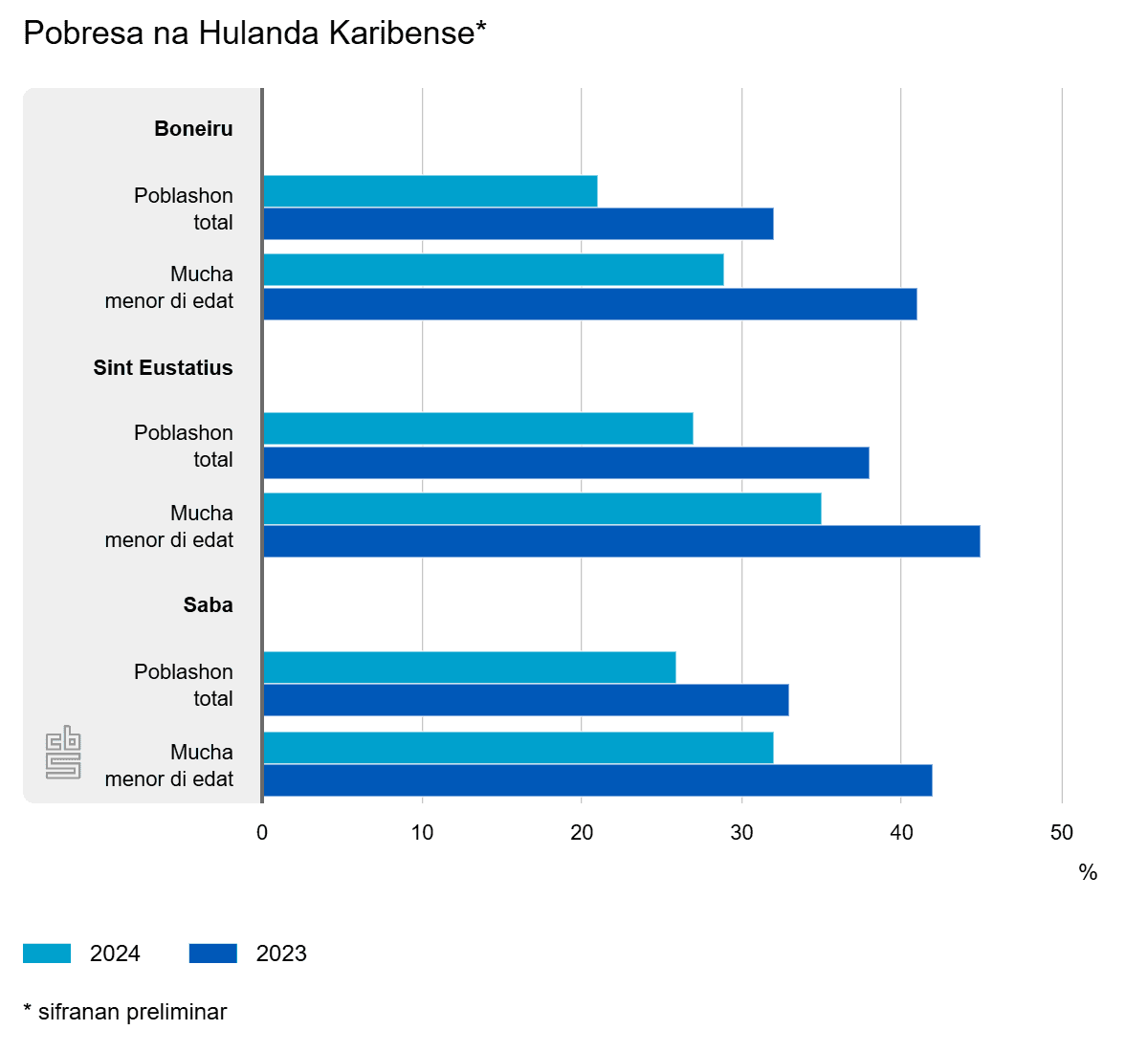
Den 2024, 21 porshento di e habitantenan di Boneiru tabata pober, un aña promé esei tabata 32 porshento. Na Sint Eustatius i Saba respektivamente 27 porshento i 26 porshento di e poblashon tabata biba den pobresa. Den 2023 esaki tabata respektivamente 38 porshento i 32 porshento. Esaki ta resultá for di sifranan ku Centraal Bureau voor de Statistiek (CBS) a formulá riba konseho di komishon mínimo sosial Hulanda Karibense, riba enkargo di ministerio di Asuntunan Sosial i Empleo.
Pobresa bou di mucha menor di edat tabata den 2024 mas haltu ku pobresa bou di e poblashon total. Respektivamente 29 porshento, 35 porshento i 32 porshento di mucha na Boneiru Boneiru, Sint Eustatius i Saba tabata pober.

Imágen: © CBS
Medidanan pa drecha siguridat di eksistensia
Pa drecha siguridat di eksistensia na Hulanda Karibense, gabinete desde 2019 a tuma algun medida. Por ehèmpel, a hisa e Suèldu Mínimo Legal (WML). Tambe a hisa e benefisionan di Penshun di Behes General (AOV), Lei di Viuda i Huérfano (AWW) i Onderstant. Ademas kompensashon pa yu tambe a subi i por a pidi kompensashon di energia. E medidanan akí tin un efekto visibel riba pobresa na Hulanda Karibense.
Imágen: © CBS
Hopi pobresa bou di esnan ku tin benefisio sosial
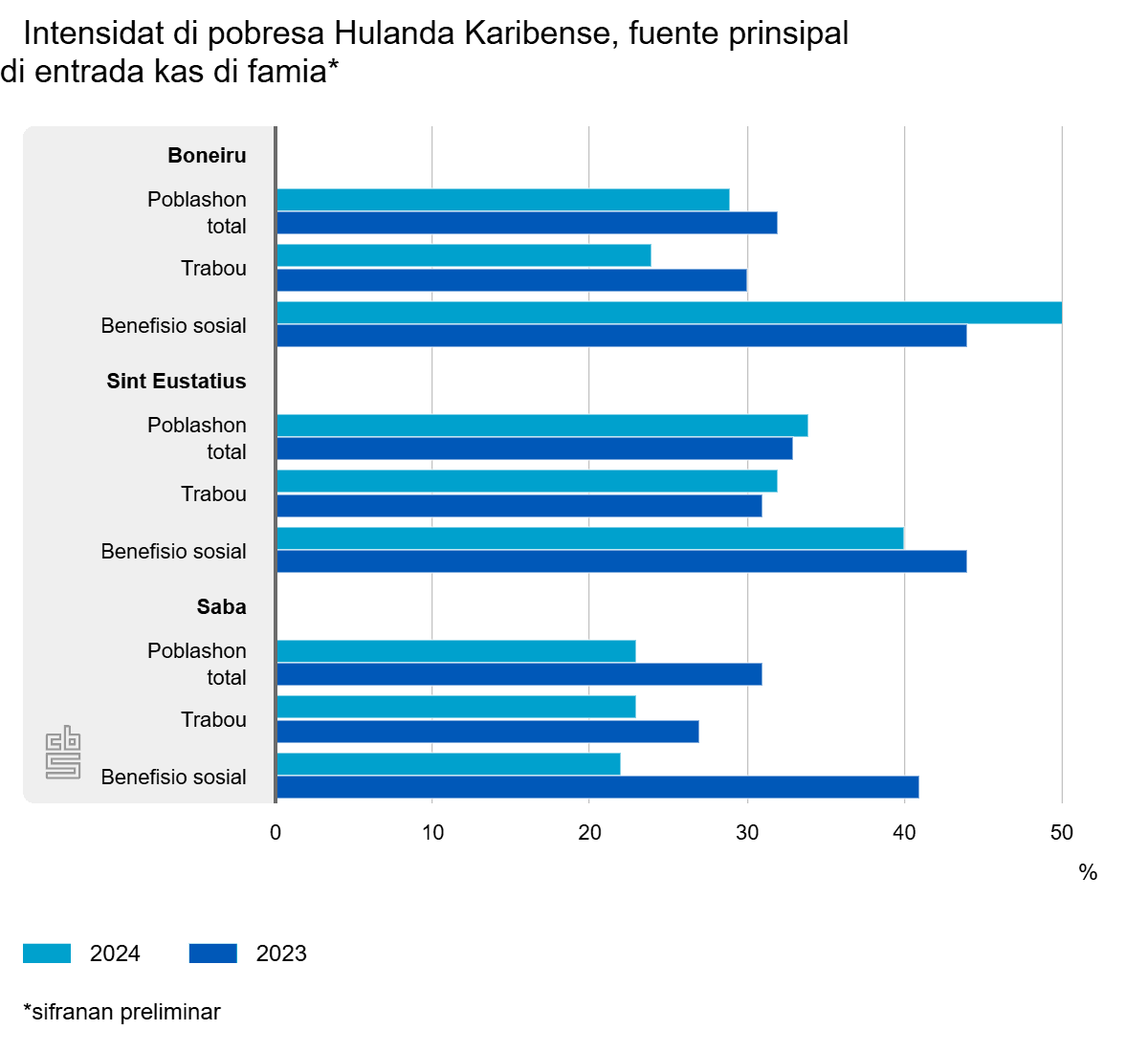
Bou di personanan den kasnan di famia ku benefisio sosial (AOV i/òf penshun komplementario, òf otro benefisio sosial) komo fuente di entrada mas prinsipal ta reina relativamente mas tantu pobresa. Na Sint Eustatius i Saba 53 porshento di esnan ku ta risibí benefisio sosial tabata biba den pobresa den 2024. Un aña promé esei tabata 76 porshento na Sint Eustatius i 62 porshento na Saba. Na Boneiru esaki tabata 43 porshento, kompará ku 61 porshento un aña promé.
Pobresa bou di trahadó ta mas abou. Na 2024 na Boneiru, Sint Eustatius i Saba respektivamente 18 porshento, 22 porshento i 22 porshento di trahadó tabata biba den pobresa: esaki tambe ta ménos ku un aña promé.
Mayoria hende pober tin trabou
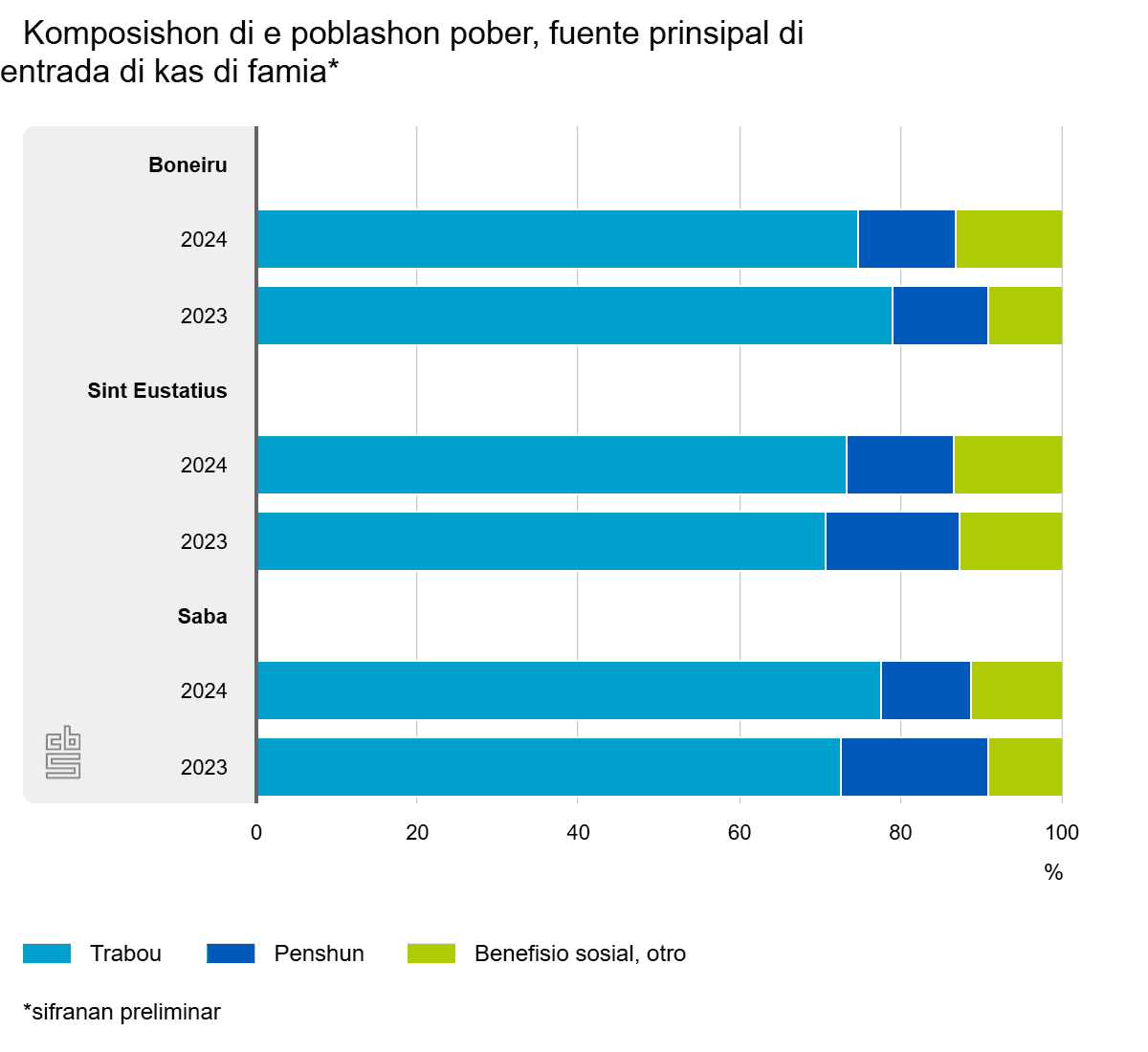
Aunke pobresa ta relativamente komun bou di esnan ku ta risibí benefisio, e poblashon pober ta konsistí prinsipalmente di persona den kas di famia ku entrada di empleo. Na 2024, 75 porshento di e residentenan pober di Boneiru tabatin prinsipalmente entrada for di empleo, ménos ku un aña promé. Na 2023 esaki tabata 79 porshento. Na Sint Eustatius i Saba, 73 porshento i 78 porshento di e poblashon pober, respektivamente, ta empleá: un poko mas ku na 2023.
Imágen: © CBS
Habitantenan pober di Boneiru tin un falta di entrada di 29 porshento
Na 2024 e entrada pa habitantenan pober di Boneiru tabata promedio 29 porshento mas abou ku e liña di pobresa. Esei ta nifiká ku di mitar di e hendenan den pobresa, mas di 29 porshento tabata biba bou di e liña di pobresa. Na Sint Eustatius i Saba e asina yamá falta di entrada akí, òf intensidat di pobresa, tabata respektivamente 34 porshento i 23 porshento.
Un bahada den pobresa no nesesariamente ta nifiká un bahada di e falta di entrada. Na Sint Eustatius e falta di entrada apénas a kambia, kompará ku e aña promé, kontrali na Saba si kaminda esaki a baha.
Imágen: © CBS
Mas di 10 porshento di hulandesnan karibense tin entrada nèt riba e liña di pobresa
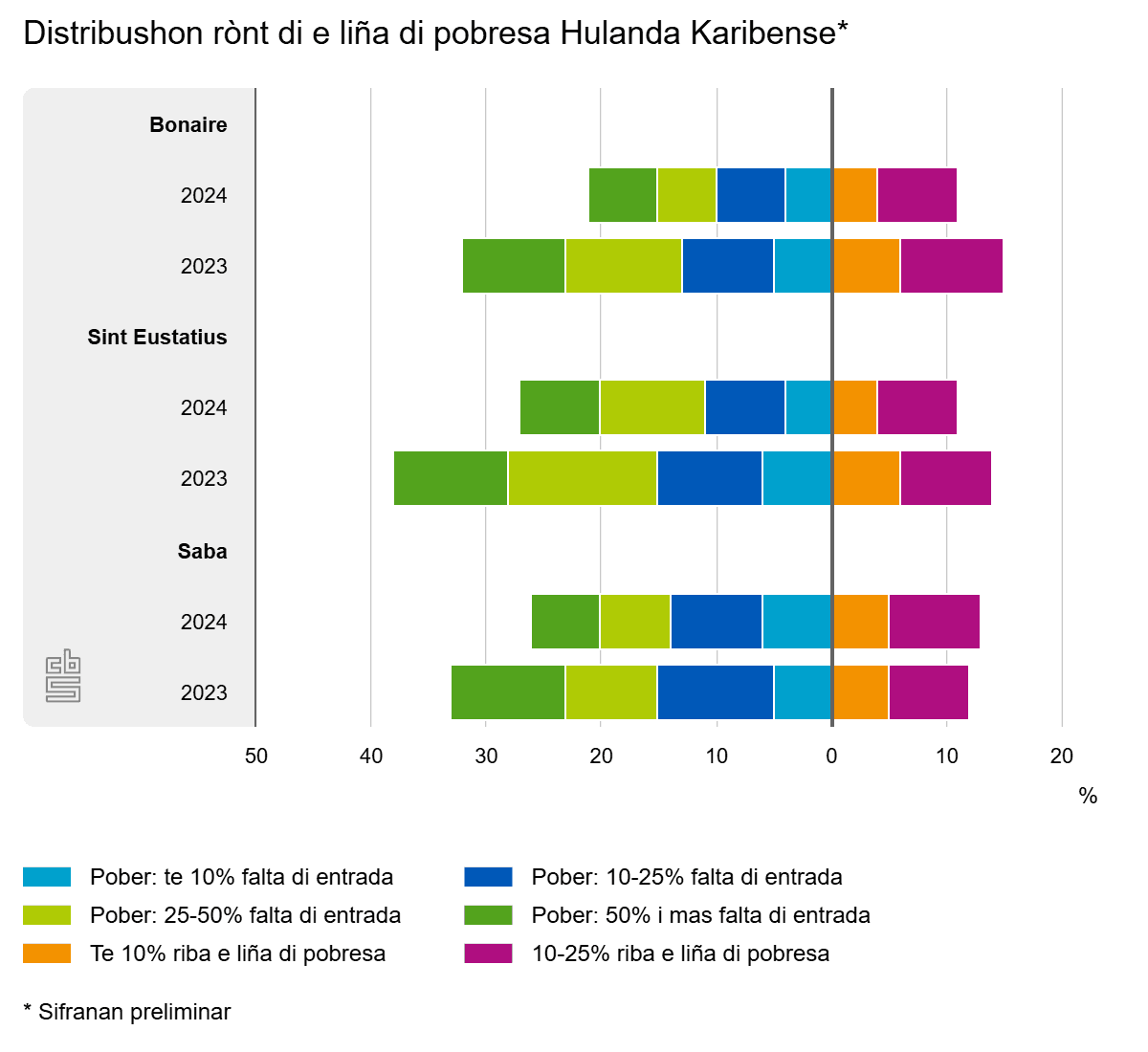
Na 2024, e habitantenan ku tabata biba ku un entrada te máksimo 25 porshento riba e liña di pobresa, a subi ku 11 porshento mas. Na Sint Eustatius i Saba esaki tabata 11 porshento i 13 porshento di e habitantenan. Na Boneiru i Sint Eustatius e grupo di esnan kasi pober ta mas chikitu ku na 2023.
Imágen: © CBS
In 2024, 21 percent of residents on Bonaire were living in poverty compared with 32 percent in 2024. On Saba, 27 percent of the population were living in poverty, while on St Eustatius this was 26 percent. In 2023, these shares were 38 percent and 33 percent, respectively. This is according to figures from Statistics Netherlands (CBS), which are compiled on the advice of the Caribbean Netherlands Social Minimum Committee and commissioned by the Ministry of Social Affairs and Employment.
In 2024, poverty among children under the age of 18 was higher than among the population as a whole. Specifically, 29 percent, 35 percent and 32 percent of children on Bonaire, St Eustatius and Saba, respectively, were living in poverty.

Image: © CBS
Measures to improve people’s sense of economic security
Since 2019, the government has taken steps to improve the sense of economic security in the Caribbean Netherlands, by increasing the Statutory Minimum Wage (WML) and social security benefits in 2024. Benefits under the General Old Age Pension (AOV), the General Widows’ and Orphans’ Act (AWW) and income support were also increased. In addition, child benefit was increased and people were able to apply for an energy allowance. These measures have had a noticeable impact on poverty in the Caribbean Netherlands.
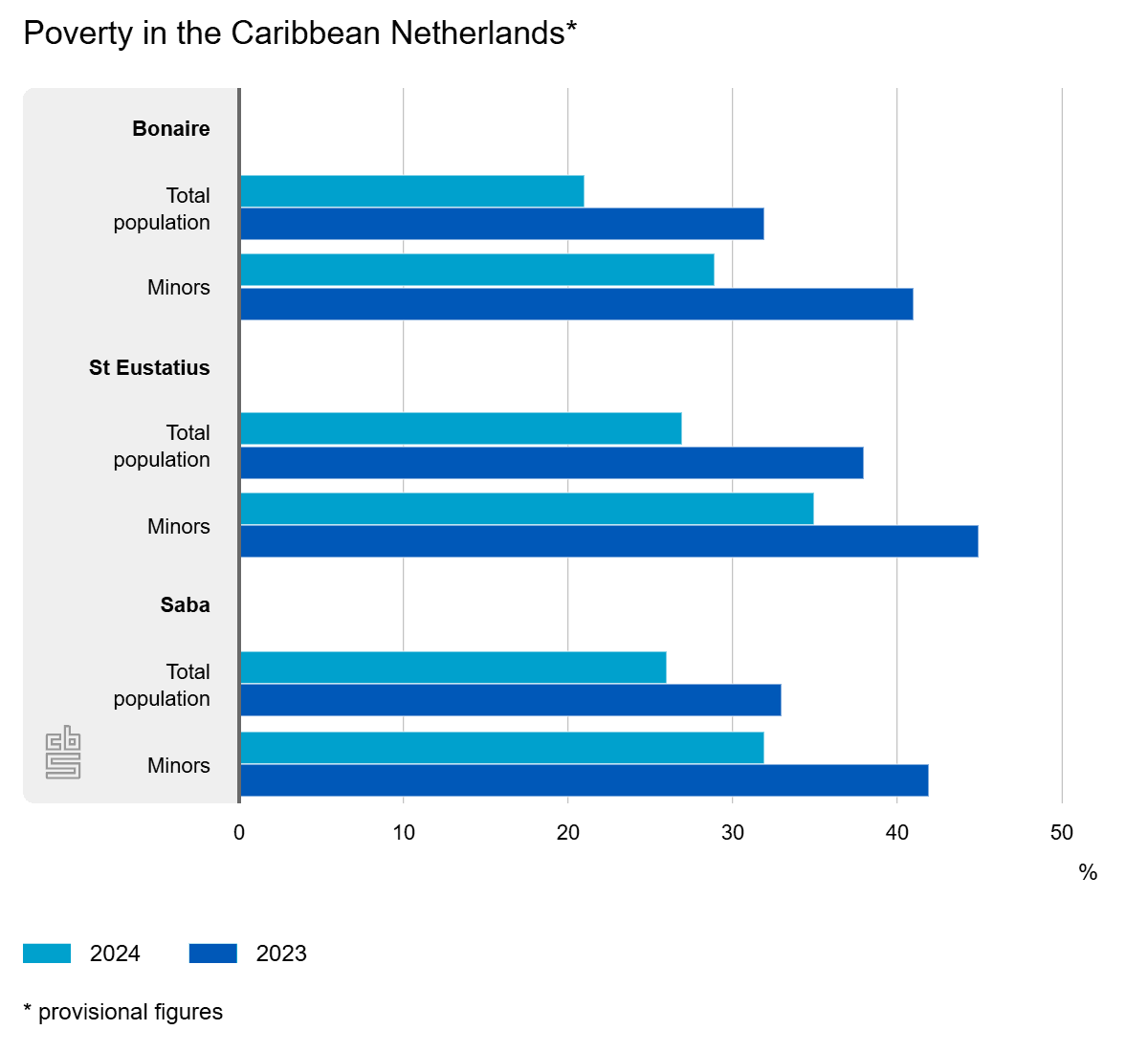
Image: © CBS
Relatively high levels of poverty among recipients of benefit
People in households reliant on benefits as their main source of income are relatively more likely to be living in poverty. On St Eustatius and Saba, 53 percent of benefit recipients were living in poverty in 2024. In 2023, these shares were 76 percent on St Eustatius and 62 percent on Saba. On Bonaire, this was 43 percent, compared with 61 percent in 2023.
Poverty among the working people was lower. In 2024, 18 percent, 22 percent and 22 percent of the people in work on Bonaire, St Eustatius and Saba, respectively, were living in poverty: this too was lower than it was in 2023.
Most people living in poverty are in paid work
Although poverty is relatively common among recipients of benefit, those living in poverty are mainly people in households receiving income from work. In 2024, 75 percent of residents on Bonaire living in poverty earned most of their income from work, compared with 79 percent in 2023. 73 percent of people living in poverty on St Eustatius and 78 percent on Saba were in paid work: slightly more than in 2023.
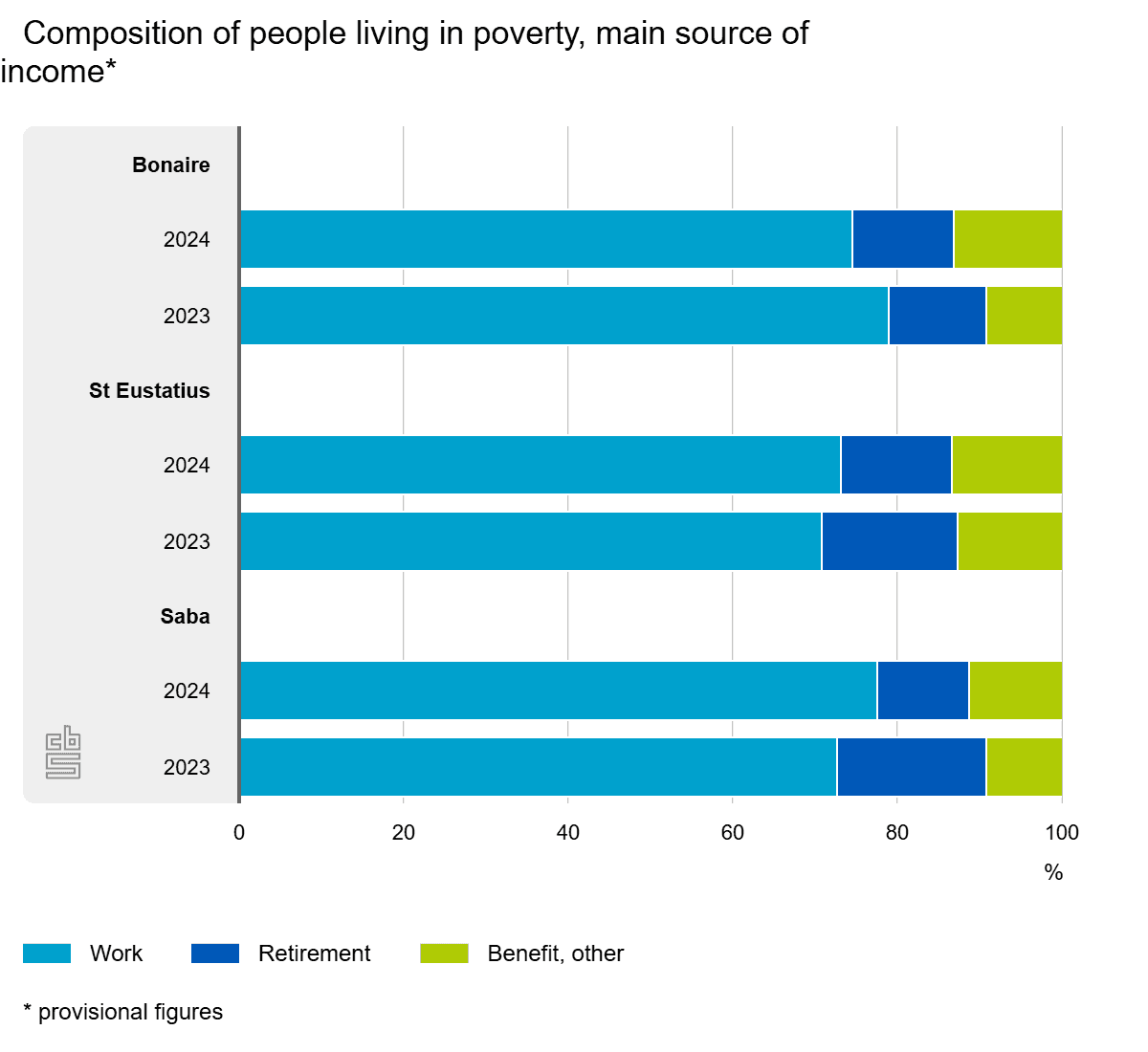
Image: © CBS
29 percent income shortfall among people living in poverty on Bonaire
In 2024, the median income of those living in poverty on Bonaire was 29 percent below the poverty line. This means that half of those living in poverty at that time were over 29 percent below the poverty line. On St Eustatius and Saba, this income shortfall – or the intensity of poverty ¬- was 34 percent and 23 percent, respectively.
A decline in poverty does not necessarily mean a decline in the income shortfall. On St Eustatius, the income shortfall hardly changed compared with 2023, unlike on Saba, where it declined.
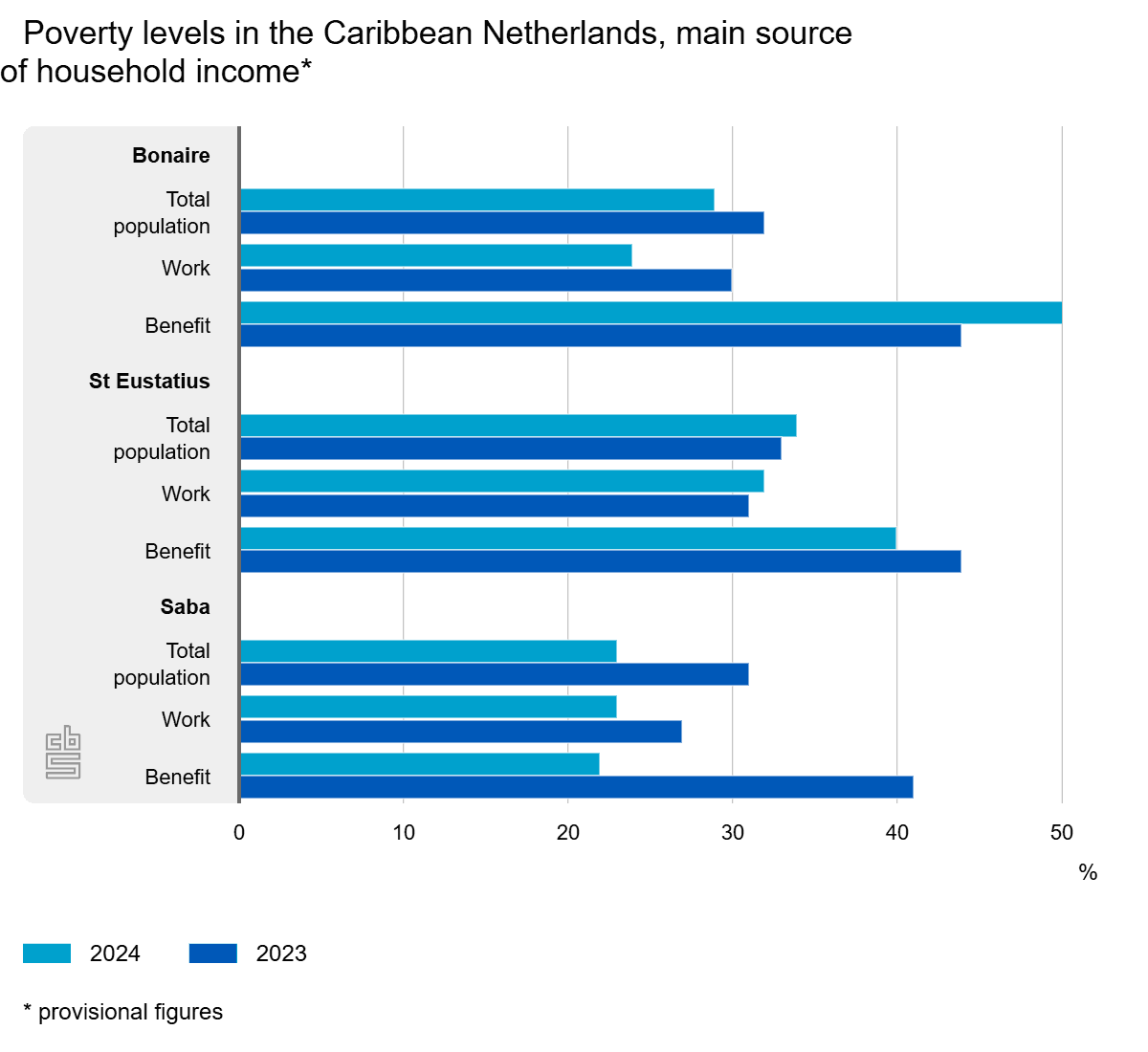
Image: © CBS
Over 10 percent of residents in the Caribbean Netherlands have an income of just above the poverty line
In 2024, an additional 11 percent of residents on Bonaire and St Eustatius were living on an income of up to 25 percent above the poverty line. On Saba, this share was 13 percent. On Bonaire and St Eustatius, the group of those living just above the poverty line was smaller than it was in 2023.
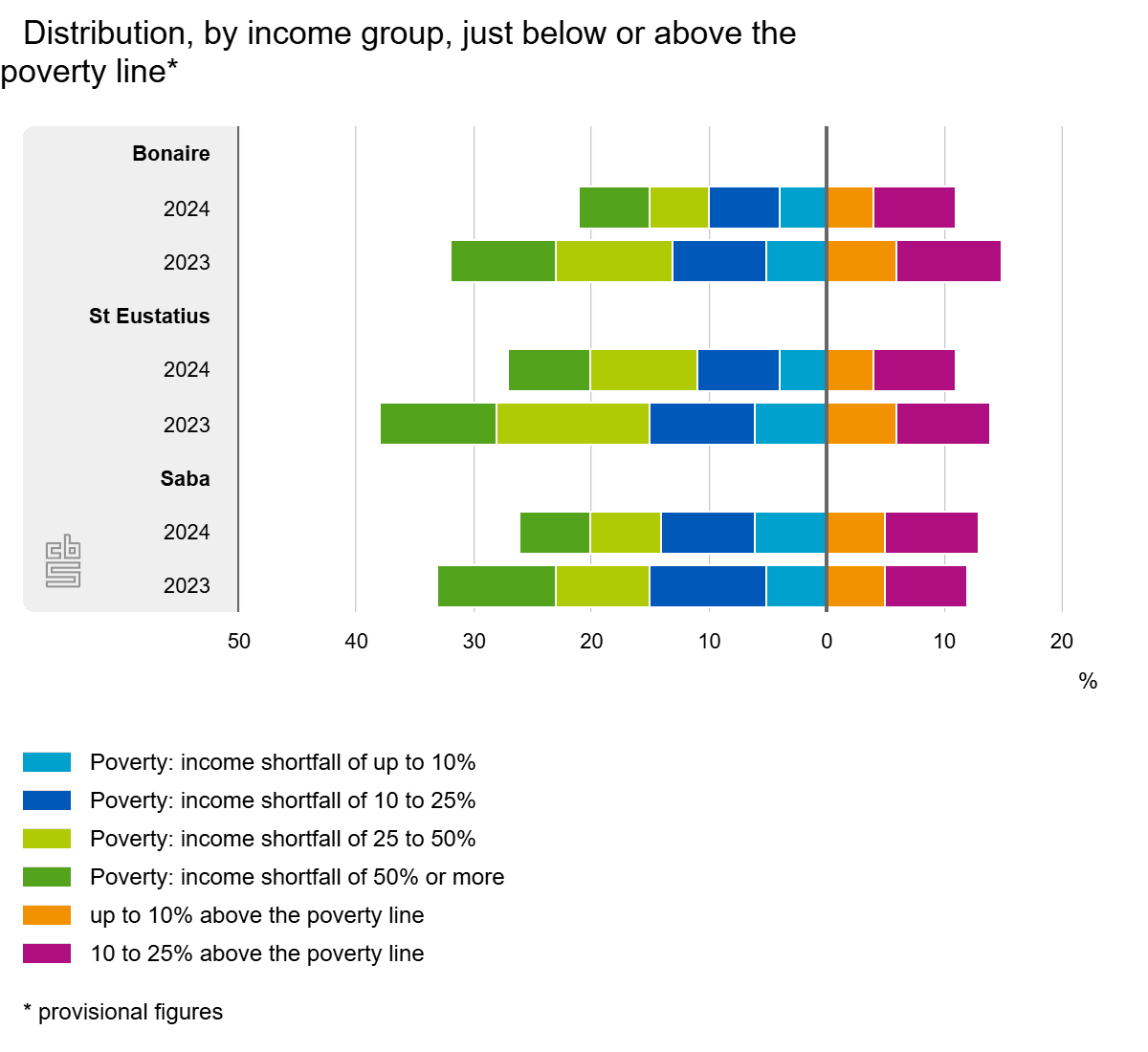
Image: © CBS
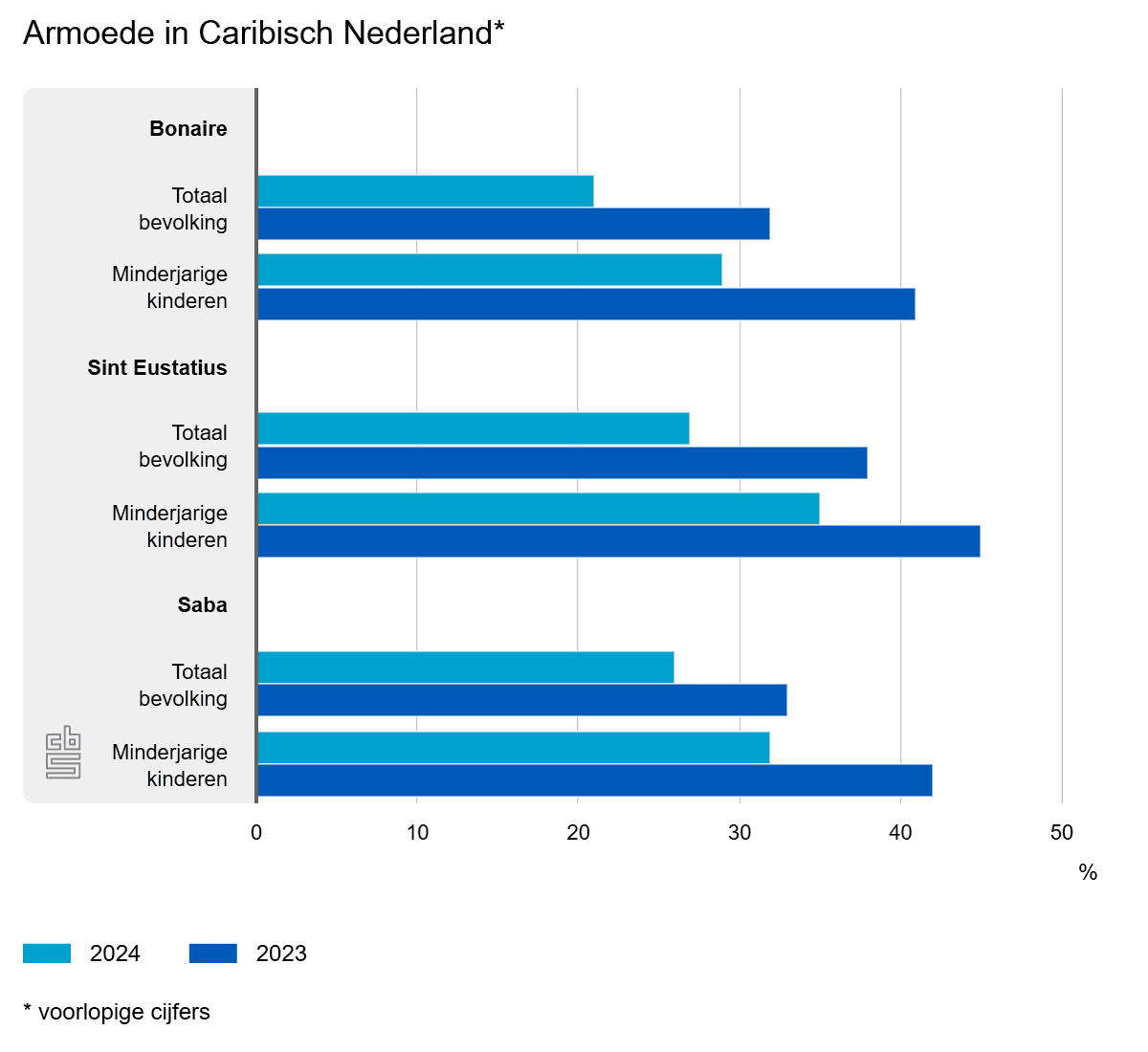
In 2024 was 21 procent van de inwoners van Bonaire arm, een jaar eerder was dat 32 procent. Op Saba en Sint Eustatius leefde respectievelijk 27 procent en 26 procent van de bevolking in armoede. Dit was in 2023 respectievelijk 38 procent en 33 procent. Dat blijkt uit cijfers van het Centraal Bureau voor de Statistiek (CBS) die het CBS op advies van de Commissie sociaal minimum Caribisch Nederland en in opdracht van het ministerie van Sociale Zaken en Werkgelegenheid heeft opgesteld.
De armoede onder minderjarige kinderen lag in 2024 hoger dan de armoede onder de totale bevolking. Respectievelijk waren 29 procent, 35 procent en 32 procent van de kinderen op Bonaire, Sint Eustatius en Saba arm.

Beeld: © CBS
Maatregelen om bestaanszekerheid te verbeteren
Om de bestaanszekerheid in Caribisch Nederland te verbeteren heeft het kabinet sinds 2019 een aantal maatregelen genomen. Zo werd in 2024 het Wettelijk Minimum Loon (WML) verhoogd. Ook werden de uitkeringen van de Algemene Ouderdomsverzekering (AOV), de Algemene weduwen- en wezenwet (AWW) en de Onderstand verhoogd. Verder ging ook de kinderbijslag omhoog en kon er energietoeslag aangevraagd worden. Deze maatregelen hebben een zichtbaar effect op de armoede in Caribisch Nederland.
Beeld: © CBS
Relatief veel armoede onder uitkeringsontvangers
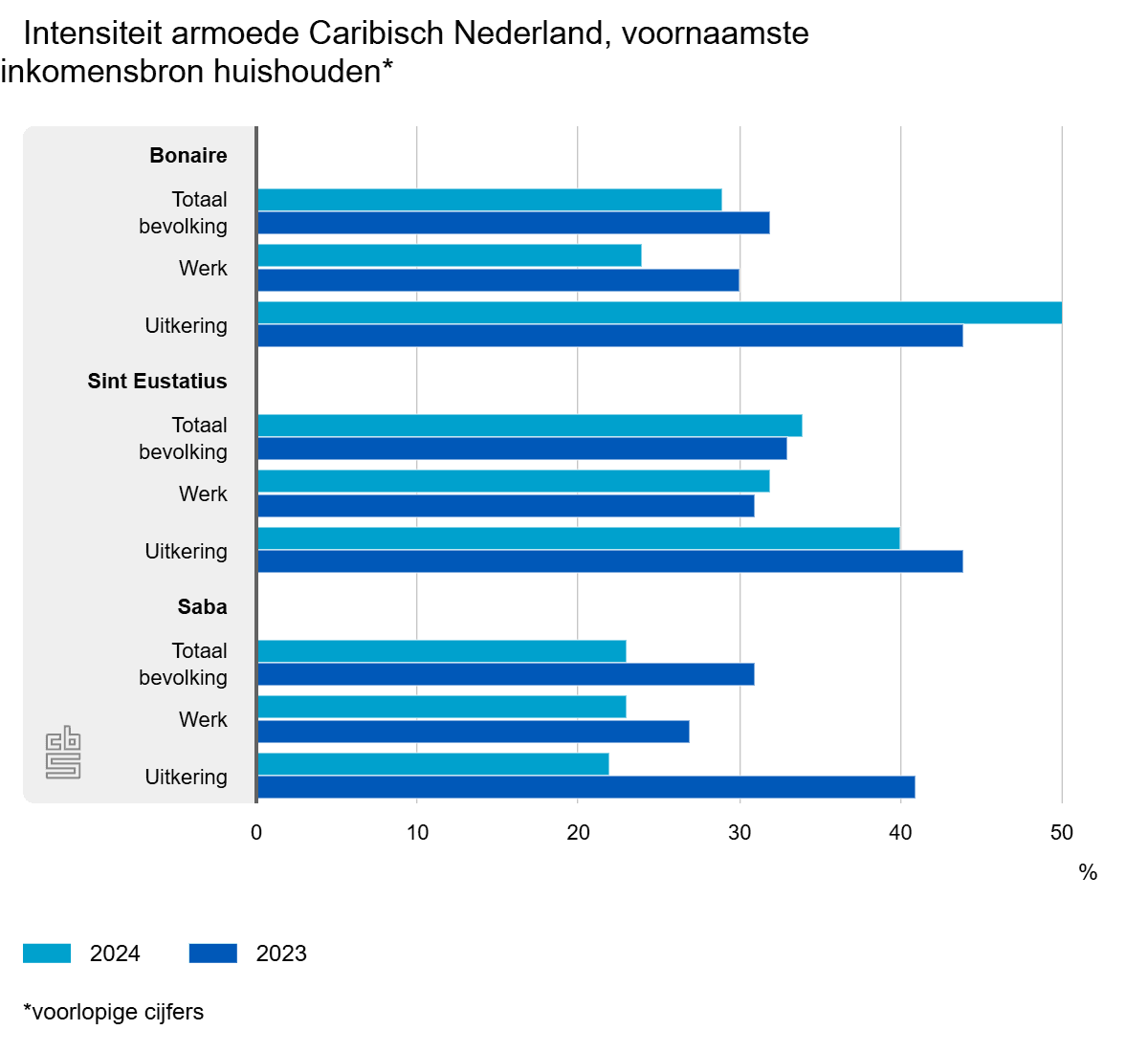
Personen in huishoudens met een uitkering als belangrijkste inkomensbron hebben relatief het vaakst te maken met armoede. Op Sint Eustatius en Saba leefde in 2024 53 procent van de uitkeringsontvangers in armoede. Een jaar eerder was dat 76 procent op Sint Eustatius en 62 procent op Saba. Op Bonaire was dit 43 procent ten opzichte van 61 procent een jaar eerder.
De armoede onder de werkenden is kleiner. In 2024 leefde op Bonaire, Sint Eustatius en Saba respectievelijk 18 procent, 22 procent en 22 procent van de werkenden in armoede: ook dit is minder dan een jaar eerder.
Meeste armen hebben werk
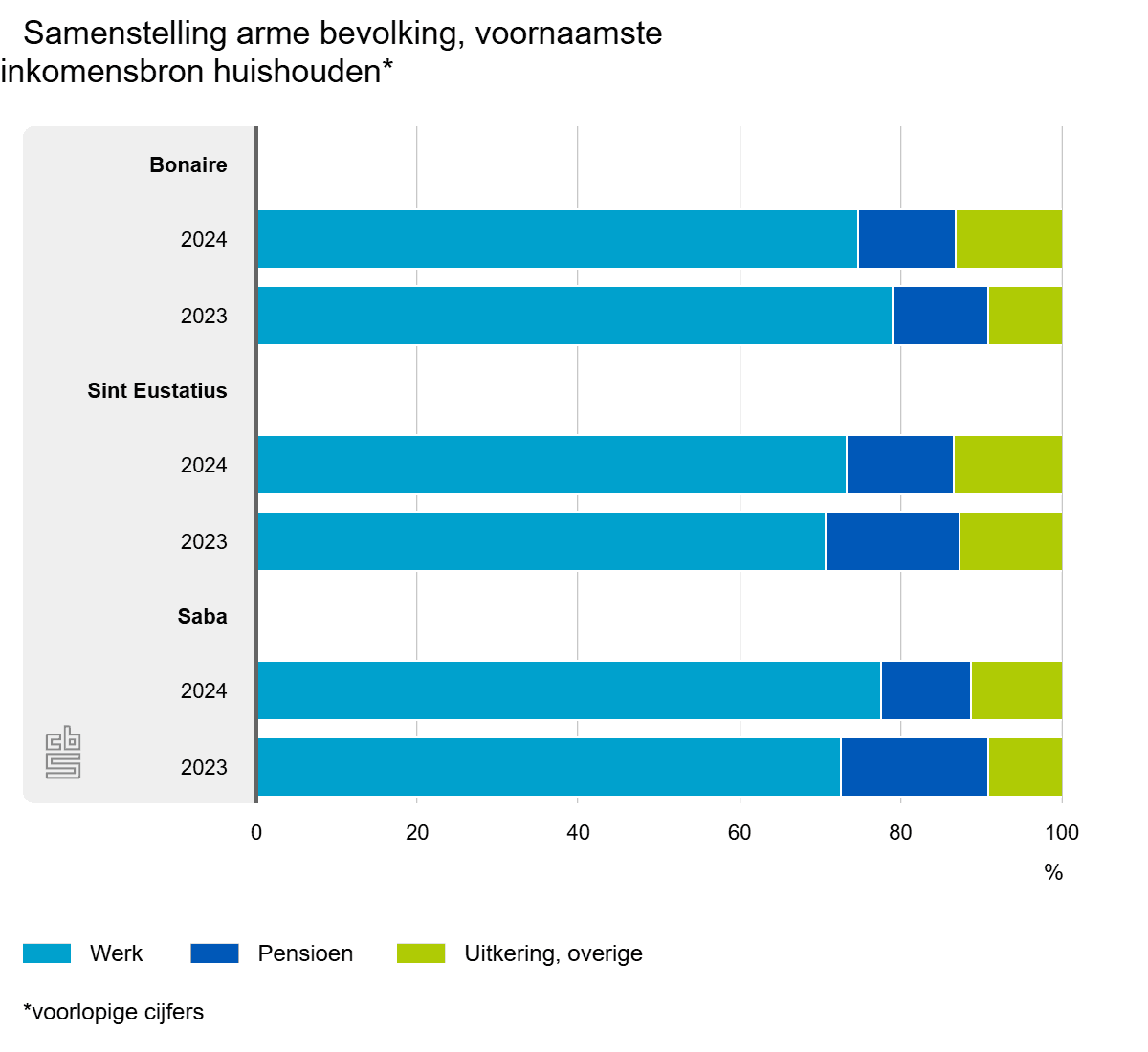
Hoewel armoede relatief veel voorkomt onder uitkeringsontvangers, bestaat de arme bevolking voornamelijk uit personen in huishoudens met inkomen uit werk. In 2024 had 75 procent van de arme inwoners van Bonaire voornamelijk inkomen uit werk, minder dan een jaar eerder. Toen was dat 79 procent. Op Sint Eustatius en Saba werkt respectievelijk 73 procent en 78 procent van de arme bevolking: iets meer dan in 2023.
Beeld: © CBS
29 procent inkomenstekort voor arme inwoners van Bonaire
In 2024 was het inkomen van arme inwoners van Bonaire in doorsnee 29 procent lager dan de armoedegrens. Dat betekent dat de helft van de mensen in armoede toen meer dan 29 procent onder de armoedegrens leefde. Op Sint Eustatius en Saba was dit zogenaamde inkomenstekort, of de intensiteit van armoede, respectievelijk 34 procent en 23 procent.
Een daling in de armoede betekent niet per se een daling van het inkomenstekort. Op Sint Eustatius is het inkomenstekort nauwelijks gewijzigd ten opzichte van het voorgaande jaar, in tegenstelling tot Saba waar dit wel daalde.
Beeld: © CBS
Ruim 10 procent Caribisch Nederlanders heeft inkomen net boven de armoedegrens
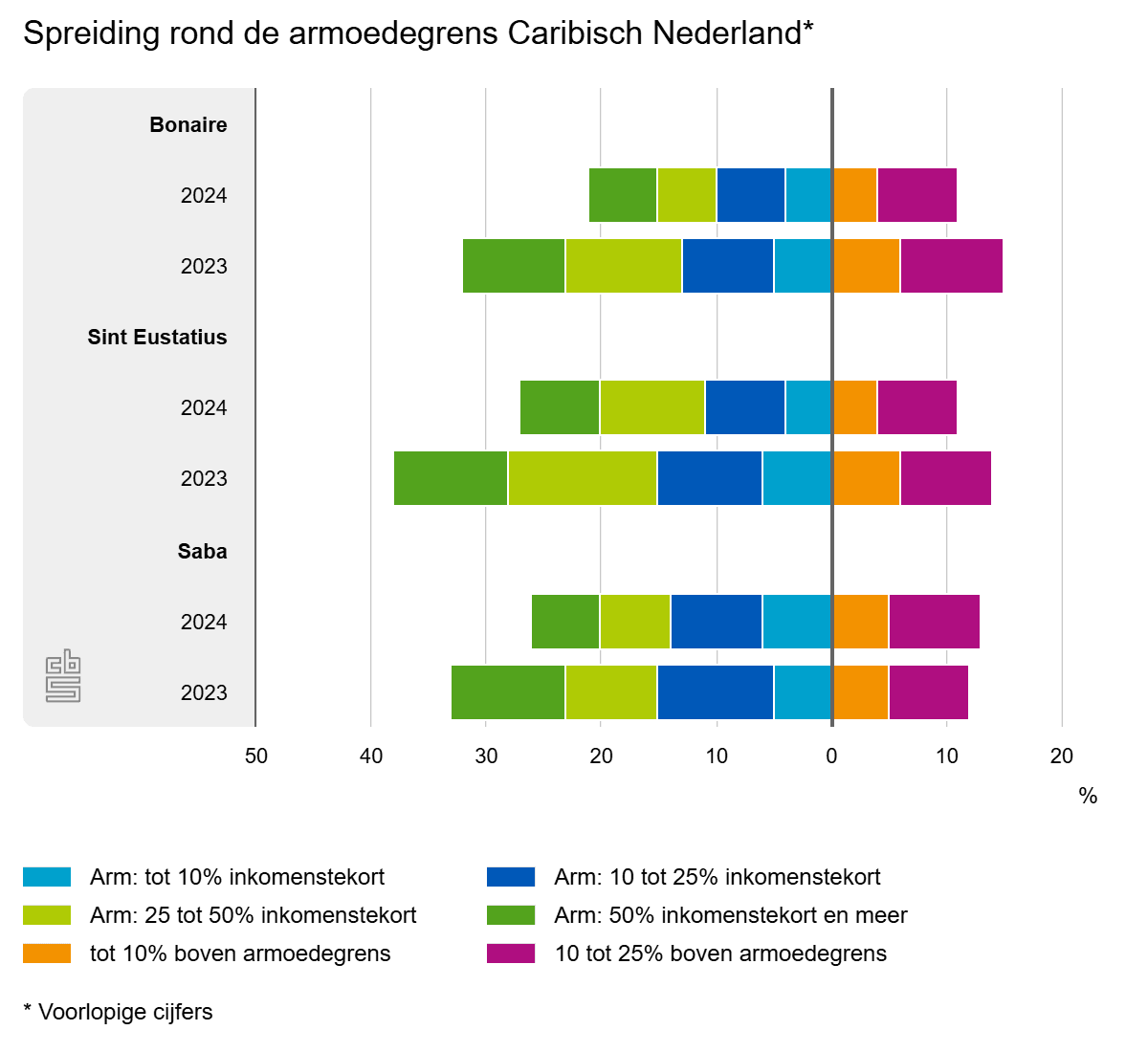
In 2024 leefde nog eens 11 procent van de inwoners op Bonaire en Sint Eustatius met een inkomen tot maximaal 25 procent boven de armoedegrens. Op Saba was dit 13 procent van de inwoners. Op Bonaire en Sint Eustatius is de groep bijna-armen kleiner dan in 2023.
Beeld: © CBS