Invasive Species Experts to Complete Next Phase of Roaming Animal Control in Boven National Park
Invasive Species Experts to Complete Next Phase of Roaming Animal Control in Boven National Park

Removal activities started in April 2026 and include live capture in urban and rural areas and the removal of animals in Boven National Park. The aim is to reduce the impact of roaming animals on nature, agriculture and food security, while also improving public order and safety by preventing livestock from roaming freely in public areas and reducing potential risks to road users and the wider community. The local hunters/retrievers carried out the initial removal activities, while the experts will focus on the remaining animals that are more difficult to locate.
First phase completed
The first stage of the project started in April 2026, with local hunters/retrievers carrying out removal activities in urban areas and Boven National Park. The work has not been without challenges, including operational setbacks. Despite these challenges, a total of 471 animals were successfully removed between April and October 2026. This included 110 roaming livestock animals that were live captured and 361 roaming feral animals that were slaughtered for meat. The meat was made available to the community, including through Friday’s meat sale. The Statia Government acknowledges the efforts and perseverance of the local hunters/retrievers throughout this period.
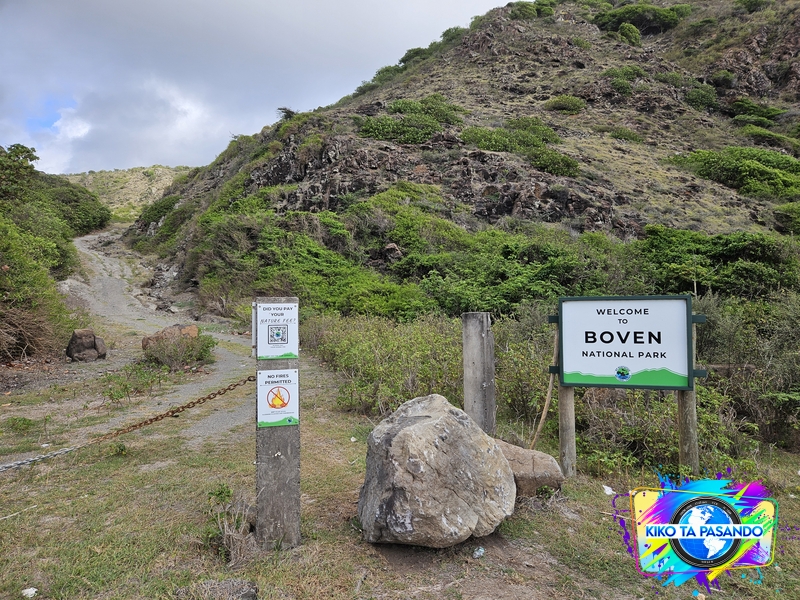
With the initial six-month phase completed, an external invasive species expert team will arrive on Statia to undertake the next phase of the project. Their assignment is to locate and remove the remaining roaming animals in Boven National Park, which have become increasingly difficult to locate following months of control activities. The team will carry out the first part of its work from 23 November 2026 until approximately 14 March 2027. Boven National Park is expected to open back up on 14 April 2027. The works will be on hold during the Christmas and the holiday period and will resume in January. Boven National Park will remain closed during this period, as reopening requires several weeks of preparation.
The roaming animal control project is a collaborative effort under the Nature and Environment Policy Plan (NEPP) and the Strategic Action Plan for Sustainable Agriculture (SAPSA), both of which have received support from the Executive Council and the Island Council. Together, these plans aim to protect Statia’s unique biodiversity, strengthen local agriculture, support farmers and improve food security. As part of this integrated approach, farmers have already received subsidies for fencing and other agricultural materials to help them better manage and contain their livestock. By combining roaming animal control with practical support for farmers, the Statia Government is working towards a more sustainable system of livestock management, agriculture and nature conservation.
The implementation of this sustainable approach also forms part of the commitments linked to the financing arrangements for the cliff stabilisation works and the acquisition of the Orange Bay Hotel.
While the current activities focus on reducing the number of roaming livestock, the long-term goal is to support a transition towards sustainable animal husbandry on Statia. Keeping livestock in secure pens improves animal management and animal welfare, while providing better opportunities for farmers to produce quality meat for the local community and export. At the same time, it reduces grazing pressure on nature and helps protect the island’s unique biodiversity and protected species.
This approach is also supported by Article 3.3.3 of the General Local Ordinance (APV), Letting Livestock Roam, which prohibits livestock from roaming freely in public areas, on government land and on private property without permission. Enforcing this regulation also contributes to public order and safety by reducing situations in which roaming livestock may pose risks to road users, residents and other members of the community. Together with ongoing support for farmers, the Government aims to build a future where agriculture and nature can thrive side by side.
The Statia Government thanks the local hunters/retrievers for their perseverance over the past six months. The removal activities presented challenges and operational setbacks, but their local knowledge, experience and continued commitment contributed to the project’s results. The Statia Government recognises their contribution as an important part of the ongoing efforts to protect Statia’s nature and improve the management of roaming animals.
For more information or questions, contact:
The Department of Agriculture and Veterinary Services: +599-318-2757
Unit Licensing, Supervision and Enforcement: +599-318-0051
Frequently Asked Questions
Why are invasive species experts coming to Statia now?
Why are both local hunters and international invasive species specialists involved in the program?
Why is the removal of roaming animals necessary?
Roaming animals cause serious damage to Statia’s biodiversity by preventing native juvenile plants and trees from growing and by affecting habitats for protected species. This makes us less resistant to extreme weather, as overgrazing is one of the causes of erosion. The programme also supports local agriculture by reducing crop damage and helping to improve food security. Removing feral roaming animals and supporting keeping livestock in pens are important steps in protecting both nature and sustainable farming on the island.
The Statia Government has also provided farmers with necessary training to help them put good livestock management practices into place. These trainings involved fencing training, poultry training, live capturing and more. Additionally, a subsidy for to support farmers building safe and sustainable housing for their livestock has been assigned, and several farmers have successfully built their pens with the help of the subsidy.
Will removal activities continue during the Christmas and holiday period?
The Statia Government has previously published a Frequently Asked Question about the topic of Roaming Animal Control and Food Security. That FAQ can be found here:
Openbaar Lichaam Sint Eustatius: Frequently Asked Questions Roaming Animal Control and Food Security