Dutch Caribbean vertalers bezoeken Literaire Vertaaldagen in Antwerpen
Dutch Caribbean vertalers bezoeken Literaire Vertaaldagen in Antwerpen
Op 26 en 27 juni vonden de Literaire Vertaaldagen van het Nederlandse Letterenfonds plaats in Antwerpen, België. De organisatie was in handen van Literatuur Vlaanderen en het Nederlands Letterenfonds. Auteurs en vertalers Loekie Morales en June Eleonora hebben een ontwikkelbeurs van het Letterenfonds ontvangen om deze dagen bij te wonen.
Deze Literaire Vertaaldagen vormen een jaarlijks tweedaags evenement voor het literair vertaalvak. Het biedt een uitgelezen kans voor literair vertalers om te leren over nieuwe ontwikkelingen in het veld, kennis uit te wisselen en collega-vertalers uit diverse landen te ontmoeten. Al jaren vond het evenement in Nederland plaats. Voor het eerst is Antwerpen de gaststad. Twee dagen lang opende de Campus Opera van de Universiteit van Leuven de deuren voor een afwisselend programma van lezingen en workshops .
Het thema van deze editie is De stem van de vertaler. In een vertaalveld dat onder hoge druk staat en ingrijpende veranderingen ondergaat door kunstmatige intelligentie, is de stem van de literaire vertaler belangrijker dan ooit. Aandacht is besteed aan de uniciteit, kunst en invloed van de menselijke stem, zowel in letterlijke zin (de vertaler binnen de tekst) als in figuurlijke zin (de vertaler buiten de tekst).
Keynotesprekers Kate Briggs en Ton Naaijkens maakten voelbaar hoe die ongrijpbare stem van de vertaler klinkt. De stem van de vertaler werd in vele hoedanigheden de revue gepasseerd. Welke overeenkomsten en verschillen ervaren vertalers die ook auteur zijn tussen hun stem als vertaler en hun stem als auteur, en welke stemmen is het Nederlands rijk?
Er werd een pleidooi gehouden voor meerstemmigheid en dekoloniaal vertalen. Darnaast is er aandacht gegeven aan een bijzondere opvoering van Anton Tsjechovs De Meeuw, waarin voor het eerst een gemengde cast van dove en horende toneelspelers een repertoiretekst speelde in Vlaamse Gebarentaal.
Auteurs en vertalers werden geïnterviewd over schrijven en vertalen. Een verkennend gesprek is gevoerd over grenzen en mogelijkheden van AI in vertaalde literatuur.
Ook is in een presentatie Vertaling als publieke ruimte aan participanten uitgenodigd om de stad als levend archief te beleven. Loop door steden en ontdek de talen van bewoners op muren, in parken e.d. Je wordt verrast door de meerstemmigheid van vertaalgebaar en door het onderzoeken ervan.
‘Een betekenisvolle wijze om ‘Vertaling te voelen’ over te brengen bij liedjes was de presentatie van een zanger die het liedje ‘Kleine Café aan de Haven‘ van Vader Abraham in het Nederlands en vervolgens in het Engels ten gehore bracht. Het publiek kon meezingen. Zelfs bij het vertalen van liedjes moet rekening worden gehouden met het op de juiste wijze overbrengen van gevoel en betekenis. Ik zong uit de volle borst mee en genoot zichtbaar van deze presentatie,‘ vertelde Morales.
Er is op 26 juni ook door het Nederlands Letterenfonds een Vertaaltalent Prijs 2026 uitgereikt aan Chiara Nardo, een vertaler uit het Nederlands die al in de opbouw van het vertaaloeuvre blijk heeft gegeven van opvallend vertaaltalent en zich actief inzet voor het vertaalvak.
Zowel Eleonora als Morales volgden het symposium en de workshops. Vooral de AI-trainingen van 27 juni l.l. Zij zijn auteurs en vertalers in en uit het Nederlands en kwamen in aanmerking voor vergoeding van de reis- en overnachtingskosten via de ontwikkelbeurs voor Literaire Vertalers.
Zij volgden ook de workshop rond het thema kunstmatige intelligentie en intelligente kunst en hun rol bij het vertalen van literaire werken. Hier zijn ook verkennende gesprekken gevoerd over grenzen en mogelijkheden van AI in vertaalde literatuur.
Morales stelt: ‘Het waren zeer de moeite waard en inspirerende dagen in Antwerpen. Een eyeopener vooral met betrekking tot wat je met AI op het gebied van schrijven en vooral vertalen kunt bewerkstelligen. Ook voor onze stichting Beyond Kultura is het belangrijk om ‘feeling’ te houden met de ontwikkelingen in het vertalersvak. BKEF steekt heel veel energie in het vertalen van Caribisch georiënteerde literatuur in de 4 talen die wij op onze Dutch Caribbean eilanden zowat dagelijks gebruiken. Dat zijn de Engelse taal, het Nederlands, Papiamentu/o en steeds meer ook Spaans,‘ zegt ze.
De Literaire Vertaaldagen worden financieel mogelijk gemaakt door het Lira Fonds, het Nederlands Letterenfonds, Literatuur Vlaanderen, het Expertisecentrum Literair Vertalen, de Auteurs en de Auteursbond.
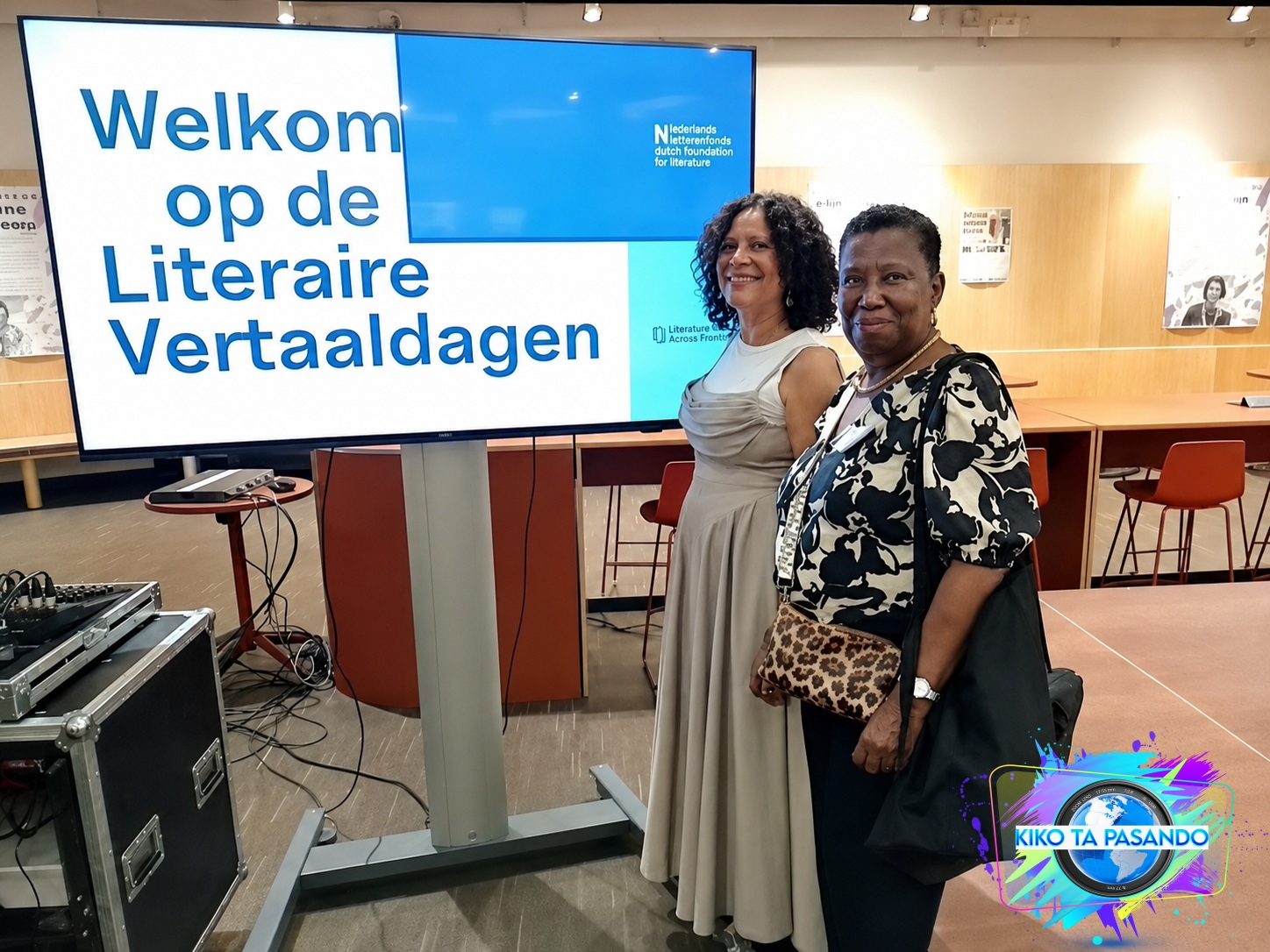
Foto: June Eleonora en Loekie Morales, tijdens de Nederlandse Vertaaldagen 2026 in Antwerpen.
Dutch Caribbean translators attend Literary Translation Days in Antwerp
The Literary Translation Days, organized by the Dutch Foundation for Literature, took place in Antwerp, Belgium, on June 26 and 27. The event was organized by Literature Vlaanderen and the Dutch Foundation for Literature. Authors and translators Loekie Morales and June Eleonora received a professional development grant from the Foundation to attend the event.
The Literary Translation Days are an annual two-day event for the literary translation profession. It offers an excellent opportunity for literary translators to learn about new developments in the field, exchange knowledge, and meet fellow translators from various countries. For years, the event took place in the Netherlands; this marks the first time Antwerp has served as the host city. For two days, the University of Leuven’s Opera Campus opened its doors for a varied program of lectures and workshops.
The theme of this edition is “The Translator’s Voice.” In a translation landscape under immense pressure and undergoing profound changes due to artificial intelligence, the literary translator’s voice is more important than ever. Attention has been paid to the uniqueness, artistry, and influence of the human voice—both in the literal sense (the translator within the text) and in the figurative sense (the translator outside the text).
Keynote speakers Kate Briggs and Ton Naaijkens brought to life the sound of the translator’s elusive voice. The translator’s voice was explored in its many guises. What similarities and differences do translators who are also authors perceive between their voice as a translator and their voice as an author, and what voices does the Dutch language possess?
A case was made for a multiplicity of voices and decolonial translation. Attention was also paid to a unique production of Anton Chekhov’s *The Seagull*, in which, for the first time, a mixed cast of deaf and hearing actors performed a classic play in Flemish Sign Language. Authors and translators were interviewed about writing and translation, and an exploratory discussion took place regarding the boundaries and possibilities of AI in translated literature.
In the presentation *Translation as Public Space*, participants are invited to experience the city as a living archive. Walk through cities and discover the languages of residents on walls, in parks, and elsewhere. You will be surprised by the polyphony of the act of translation and by the process of exploring it.
‘A meaningful way to convey the concept of ‘feeling the translation’ in songs was a performance by a singer who sang Vader Abraham’s ‘Kleine Café aan de Haven’ first in Dutch and then in English. The audience could sing along. Even when translating songs, it is essential to convey emotion and meaning effectively. I sang along at the top of my lungs and visibly enjoyed the performance,’ said Morales.
On June 26, the Dutch Foundation for Literature also awarded the 2026 Translation Talent Prize to Chiara Nardo, a translator from Dutch who has demonstrated remarkable talent while building her body of work and who is actively committed to the translation profession.
Both Eleonora and Morales attended the symposium and the workshops—specifically the AI training sessions held on June 27th. As authors and translators working with Dutch, they were eligible for reimbursement of travel and accommodation expenses through the development grant for literary translators. They also participated in a workshop exploring the themes of artificial intelligence and “intelligent art,” and the role these play in the translation of literary works; this included exploratory discussions regarding the boundaries and possibilities of AI in translated literature.
Morales states: ‘The days in Antwerp were truly worthwhile and inspiring. It was an eye-opener, especially regarding what can be achieved with AI in the fields of writing and—above all—translation. It is also important for our foundation, Beyond Kultura, to stay in touch with developments in the translation profession. BKEF invests a great deal of energy in translating Caribbean-oriented literature into the four languages we use almost daily across our Dutch Caribbean islands: English, Dutch, Papiamentu/o, and increasingly, Spanish,’ she says.
The Literary Translation Days are made possible with financial support from the Lira Fund, the Dutch Foundation for Literature, Literature Flanders, the Centre of Expertise for Literary Translation, De Auteurs, and the Auteursbond.
Photo: June Eleonora and Loekie Morales during the Dutch Translation Days 2026 in Antwerp.
